
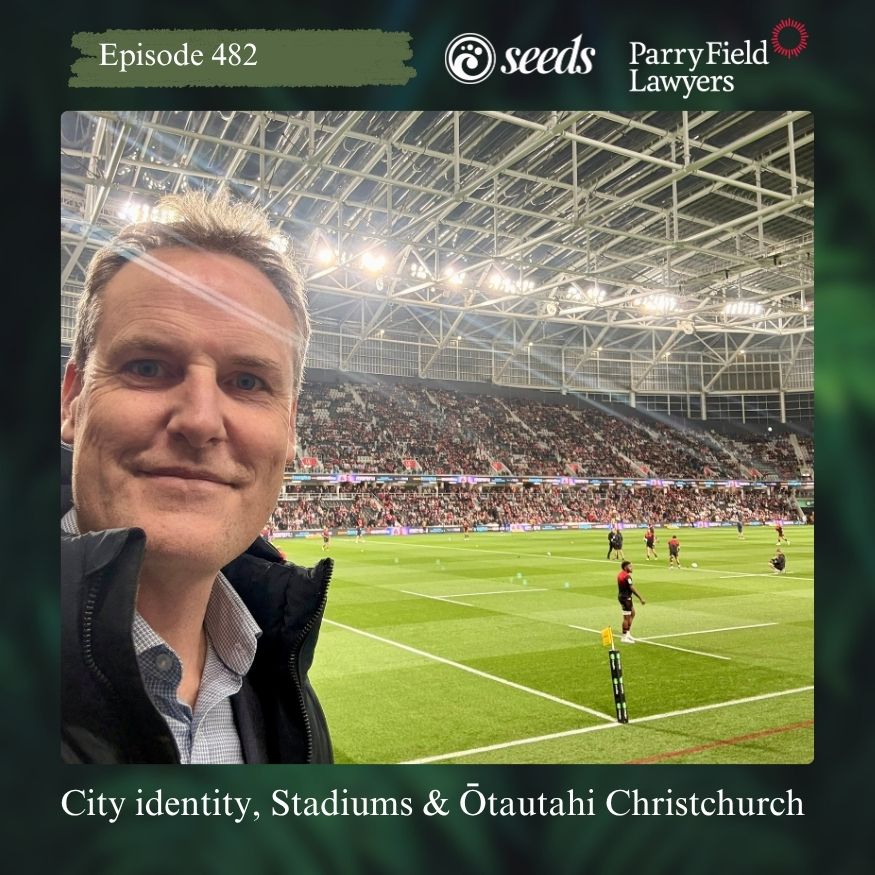
Last Friday night in Ōtautahi Christchurch I joined a community of 25,237 gathered in one place to watch the opening event at the new One Stadium, “Te Kaha”. The number attending flashed up on the large screens as we watched the end of an entertaining rugby game between the Crusaders and another team (being one eyed, it didn’t matter who).
We all cheered as the number attending was shown, with the entire evening feeling much like a celebration. But why was that and what did it represent? Why should the opening of a stadium, and a costly one at that, elicit strong emotions?
I grew up in Christchurch and remember going to the old Lancaster Park stadium to watch an All Blacks game decades ago on a cold, wet and wintry night. That structure was damaged by the ground rumbling beneath it in 2011 when it joined a long list of other condemned structures, a broken temple to the power of sport, for it had hosted Cricket, Rugby (and pop stars) for many decades.
The new stadium was not guaranteed and in the interim 15 years smaller venues have provided a place for community events. This has meant that big acts have sometimes skipped Christchurch, most memorably Ed Sheeran, who opted for Dunedin instead.
There have been two prevailing arguments about what should be built, if anything.
On one side were those who said, and still say, that the cost is wasteful (around $680 million) to create a large building like a stadium that would outweigh the benefit that would result. This argument looks in particular at the economics of it all and the amount that would be borrowed and which ratepayers ultimately will pay via Council loans.
It also asks, legitimately, if a cheaper version could have been possible and what the above budget amount could have been spent on instead (though would such funds have actually gone to help those with health or other needs?). This perspective might argue it is like creating a modern day pyramid, and that those who can afford to attend events will be the middle and upper class so question if it is really of benefit for all?
The other side argues that the cost involved is secondary to the impact such a structure can have. This argument points to the flow on effect of more visitors who stay in hotels, eat out, visit shops as well as tourist spots, then often take the chance to spread out into the surrounding areas like Akaroa or skiing at Mt Hutt. If they like the experience, then they become ambassadors for the city when they return home.
A stadium can help with the revitalisation of a city. Public investment in such infrastructure can encourage private investors to create more facilities, restaurants, hotels and attractions to serve those who attend events. This means the monetary figure of how much it cost and how much it will make is just one side of the Rubik’s cube to solve. There are other flow on impacts that have greater value, including the feeling of forward motion for the population that such a new stadium provides with a sense of future focus. That matters but no price can be displayed for it.
This is a city which has been through a lot. Not just earthquakes either, for there have been fires and a mass shooting as well and it has changed the character of the city. The ‘vibe’ in the streets all day long on Friday was palpable. A positive sense of something growing here and somehow having the stadium open adds to a momentum which has been gaining force over the last few years. It is not the start point for a completely new stage yet, as there is more to come, but it does help. There are examples of this we can see clearly.
I often hear about and meet people in other parts of the country slyly checking house prices and realising what selling in Auckland could buy them in Christchurch. Estate agents field more calls from those out of town. Others plan a holiday that now includes Christchurch as the starting point instead of flying straight to Queenstown. Entirely new cities on the outskirts continue to grow, in particular Rolleston, now having tens of thousands where there used to be small country pubs.
Back in the city, the restaurants and bars along the Avon River and the Riverside Market are busy with locals and visitors. Street performers play with the crowds in front of giant murals that decorate the city around hidden corners and new laneways that recall Melbourne at its best. After the game on Friday, we all flowed easily down the streets, pulled as if in a current towards those venues as the new Stadium is close enough to be directly connected to the city.
The critics can point to the cost of the structure and its prominence. From the Christchurch Gondola the stadium certainly stands out, like a round spaceship freshly landed gleaming in the sun. But perhaps it is the destiny of anything new to be subject to some negative commentary, particularly if it is large and public. In 1889 the Eiffel tower was a temporary construction for the World Exhibition. One critic described it then as, “this truly tragic street lamp” but almost 140 years later it has stood the test of time as one of the most visited spots in Europe.
In the end is it best to choose to wilfully ignore the cost involved to create the stadium because the long term impact and what it will add to the ‘vibe’ of the city? I think so, and since it is there now, we might as well embrace it and enjoy what it offers.
That was certainly the feeling on the night watching the game. Christchurch needed a central place where its citizens can come together for community connection, to unite, sing along and cheer with collective enthusiasm. The new stadium provides that place while providing another building block that is part of a rebuild of the city’s identity as well.