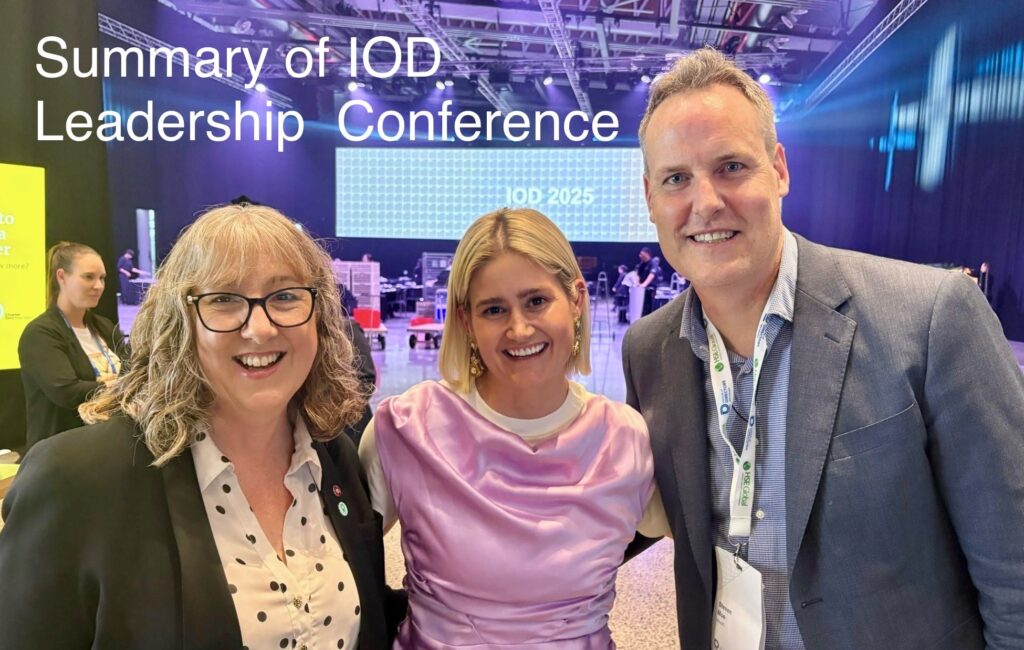
Am at the annual Institute of Directors in New Zealand Leadership Conference with 600 or so. I hosted a panel on vulnerability in the boardroom. Thought I’d post some content on key themes so you can learn too.
One of the recurring themes that has stuck out to me was the human element of governance. A key word used was “Trust” across different sessions – as well as the technical competence and planning and strategy setting it is important to remember the relationships and connections across a Boardroom table. This was a key theme in the panel I helped facilitate described below on creating safe spaces in the Board room with Eugene and Bella outlined below (which was based on the Board Matters podcast hosted over here).
As a lawyer I like to hear about what is at the front of mind for people as it can help when deciding on legal structure options (many free resources on governance are here as well!). So, in this article have put a summary of the sessions so that you can also see what was discussed and take your own learning from some aspect set out here! There were breakouts so I was not able to attend everything on but you will get a sense of all the main sessions and the ones I did attend. If you like this summary and want to connect on LinkedIn feel free to do so – my profile is here.
– – –
What does it take to build Trust?
Here is a summary of the Keynote to start by Kirsty Graham from Edelman Trust Institute –
– the pace and number of issues are increasing, so how will we respond?
– you must have trust – the Edelman Trust Barometer shows trust is becoming more local, fragile and important
– Trust and the crisis of grievance – with grievance people lost trust and lower income mired in distrust so less belief in leaders and that they are not telling truth
– Implications for business leaders: contribute to your communities, train and reskill your employees, fix problems you caused, shift brand purpose from ‘we’ to ‘me’, allow people to disagree better at work,
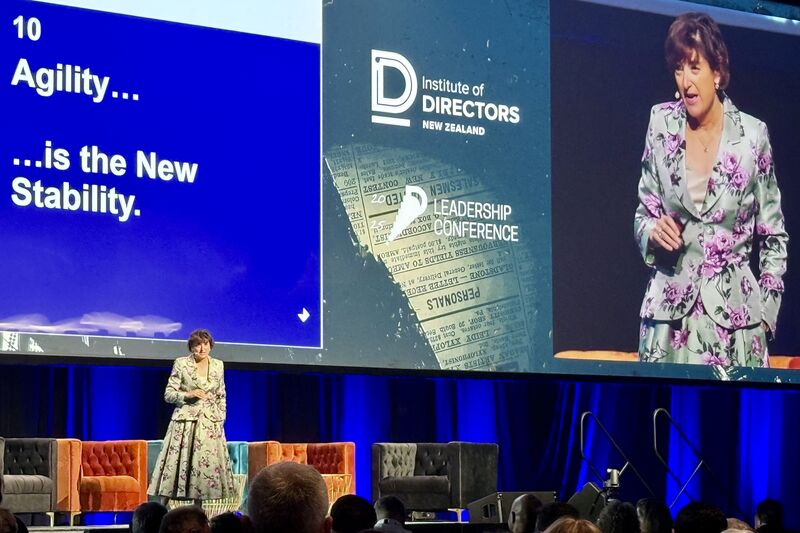
Top 10 takeaways:
1. Know importance of leadership – invest in relationships (face to face)
2. Understand media has changed – misinformation travels fast, rise of influencers (reinforce beliefs rather than facts) vs traditional media
3. Be human in how you communicate – own mistakes, say if you don’t have answers, be informal
4. Know your swim lanes – where you speak into (or not)
5. Keep values consistent – Stakeholders spot inconsistency, know history and values
6. Make workplace island of civility – empathy, listening, authenticity
7. Lean into power of personal – trust has moved local so bring familiar/relationship, words matter
8. Help the next generation – they are looking for purpose, tell it straight
9. See power of AI with the human – don’t delegate this, start to use yourself – EQ, creativity and judgment differentiate
10. Agility … is the new stability – move broadly and quickly
Make sure you are simple inside when the world is complicated outside…
For all institutions:
Government: Deliver results that benefit me
NGOs: Don’t be divisive, repair social fabric
Traditional media: Make intentions clear
Influence: Is earned by compassion
In a world where AI mimics us, we must get better at being human…
Steven’s reflection: I really liked this overview because it balanced objective research and information with a compassionate view of the context of today with 10 practical steps to take. The idea that we need to be agile is a really good attitude to take on as boards.
– – –
Building Global Companies from New Zealand
Next Bowen Pan shared in second session on what it takes to build global companies from NZ. He helped start Facebook Marketplace.
- Intensity separates dreams from outcomes – successful companies need to execute relentlessly
- But what is your aim?
Lane 1 – $10-100m – master of own time
Lane 2 – $100m-1b – drive regional change
Lane 3 – $1b plus – drive global change - Ambition – not a dirty word
- Founders might just need backing to build what they need to do
- Be curious and explore blue skies way
- be good at delivering “Execution eats strategy for breakfast”
- Stay close to customers, sit with customers while they use products.
- Ship quickly and monitor so a feedback loop
- Stay ruthless on sunk costs to eliminate them
- As a country aim for high growth rate and this can be done via global businesses
- Define success matrix and review
- Set 50/50 goals now – ambitious and execute and learn if doesn’t work
- Focus on feedback and have hard conversations and promote those who achieve
- Use data to show evidence of why customers should move
- Stay human while you do all this
How do we address tall poppy syndrome? You can control culture in your company and what you celebrate
Do we back lane 3 companies and bold visions? Can we lift the trajectory of this country?
Steven’s reflection: This was an interesting take on companies – my own view is that we need small and medium sized companies who produce high quality goods and provide needed services and employ people, with purpose at their core – not every business needs to aim to be a billion dollar company.
The architecture of an enduring enterprise.
Next we were asked to think about life spans – what if we only lived to 40? This is the case for companies with average life span of companies decreasing. Russell Low from Clermont Group with HQ in Singapore which was founded by Richard Chandler a Kiwi. Shared about:
- Hoan My in Vietnam providing health care
- SBFC in India providing small SME loans
- Magnix with aviation by electric aircraft
What can the Board do to improve the lifespan of a company? There are several stages and end results possible.
Stage 1 – entrepreneurial beginnings
Stage 2 – Scaling mode
Stage 3 – Fork in the Cycle –
Stage 4 – up to success OR decline into irrelevance
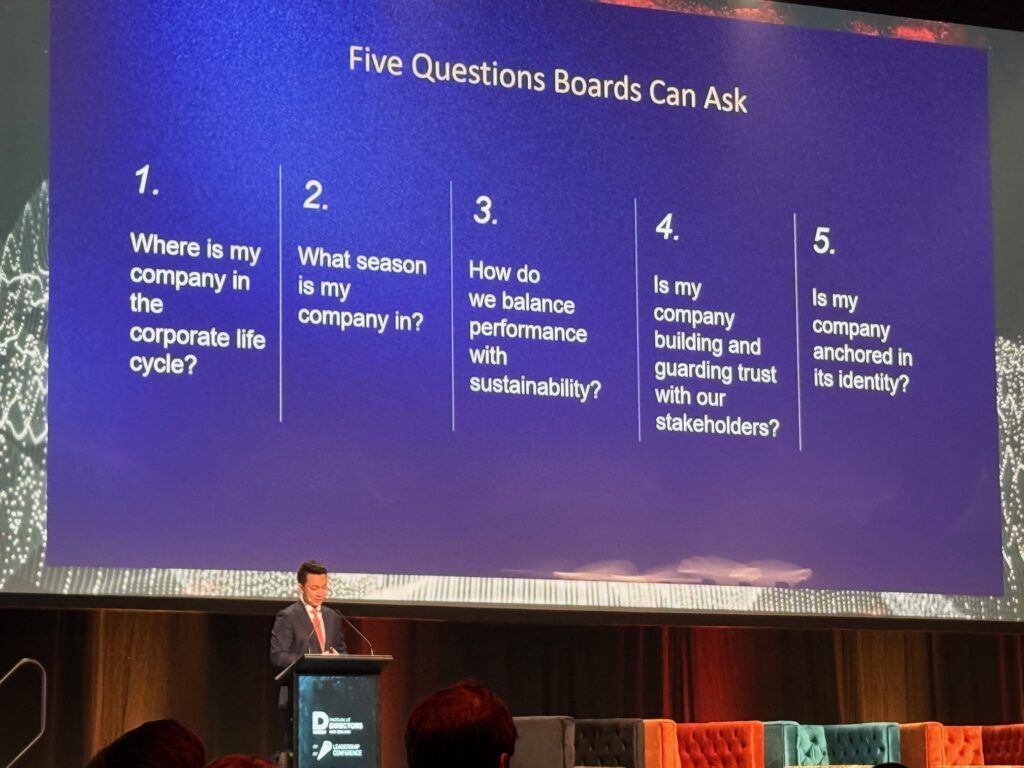
So think about season you are in. Balance performance today with sustainability for tomorrow.
Identity distinguishes who the company is from what it does. A company may lose identity before it loses business.
Steven’s reflection: I liked the emphasis on longer term thinking and being intergenerational in this talk and also the idea that we need to be clear on identity and purpose as the driving force.
– – –
Panel on Health & Safety
Dean Bracewell, Sheridan Broadbent and Nathan McGraw had a panel discussion on health and safety in the context of aviation and Air New Zealand – key issue is to find lane in which to operate and keep learning from what you hear on the ground. Staying on track with safety? You need to make it an everyday part of conversation. Safety is not competitive – you can learn from other industries, so reach out and learn from other industries. Add in perception reports ie future focus. Culture matters on all this…
– risk exists everywhere but be aware it shouldn’t be a barrier to doing things, just manage it
– safety and risk is a window into broader culture of company
Steven’s reflection: It was nice to hear this on the agenda as being something Boards need to take seriously and consider but this probably reinforced messages have heard already.
– – –
Power of better questions
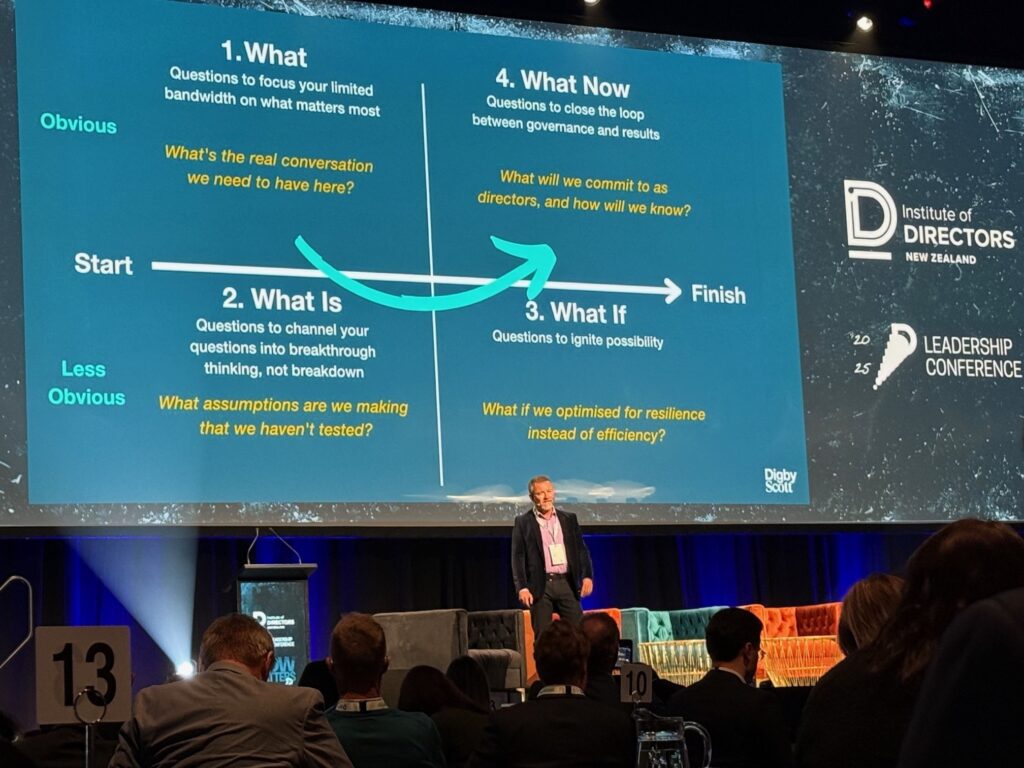
This was a short session with Digby Scott: When was the last time you asked a question you didn’t know the answer to? The right questions need to be asked otherwise you risk reputational cost and other costs. Do we put out statements or questions? High performing teams will have 1:1 ratio compared to lower performing 20 statements: 1 question.
Get beneath assumptions, stories we tell about how awesome we are – requires curiosity and vulnerability to ask questions. The what, what is, what if and what now questions. See slide below.
Steven’s reflection: This was a short talk and I really liked it because Digby got straight into content and I think sometimes in longer talks there is a bit of waffle without getting to the point to be made. I liked the framing of the questions to be asking in slide below.
– – –
Facilitated session on creating safe spaces in the Boardroom – a live panel discussion of Board Matters
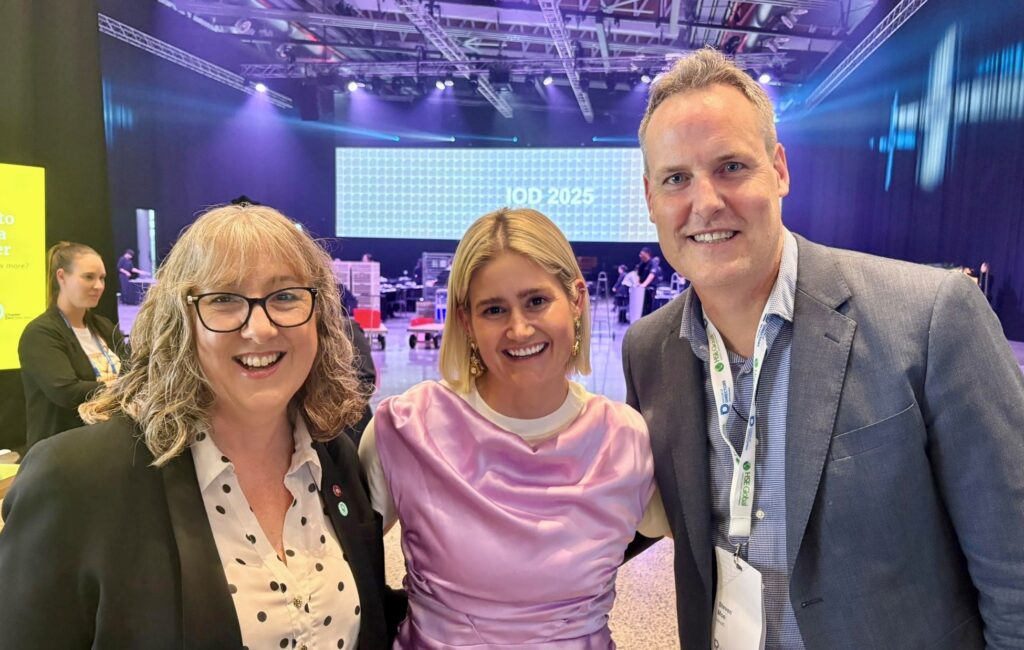
Really enjoyed facilitating this panel with Bella Takiari-Brame and Eugene Berryman-Kamp on creating safe spaces in Boardrooms at the Institute of Directors in New Zealand leadership summit with about 100 attending our panel.
What do you think makes a safe space in the Boardroom? 🌱 You can find out more about Board Matters here Board Matters Podcast Season 4 | IoD NZ – now with 4 seasons!
We covered the importance of vulnerability, the role of the Chair to create this space, importance of having face to face interactions, calling people back to purpose, inducting new members well and built in a bunch of Te Reo in honour of Te Wiki o Te Reo!
Be watching out as we will make the audio a one off episode!
And Juanita Hudson CMInstD is in this shot too as the behind scenes superstar who helps Board Matters Podcast happen! Thank you! And to Guy Beatson, CMInstD who welcomed everyone to the session and Kim Gerard for coordination. Maria King was missed but hope you feel better asap!
Previous episode with Bella on Board Matters: https://open.spotify.com/episode/4di4BTcRreh2MVWPhMlKsE?si=iothCNtFQc6fR53utv6hNg
Previous episode with Eugene on Board Matters: https://open.spotify.com/episode/7o4xQNcjDg5UC2glHPZ4C3?si=zx23mvs8RfGLwr4MoKwY1w

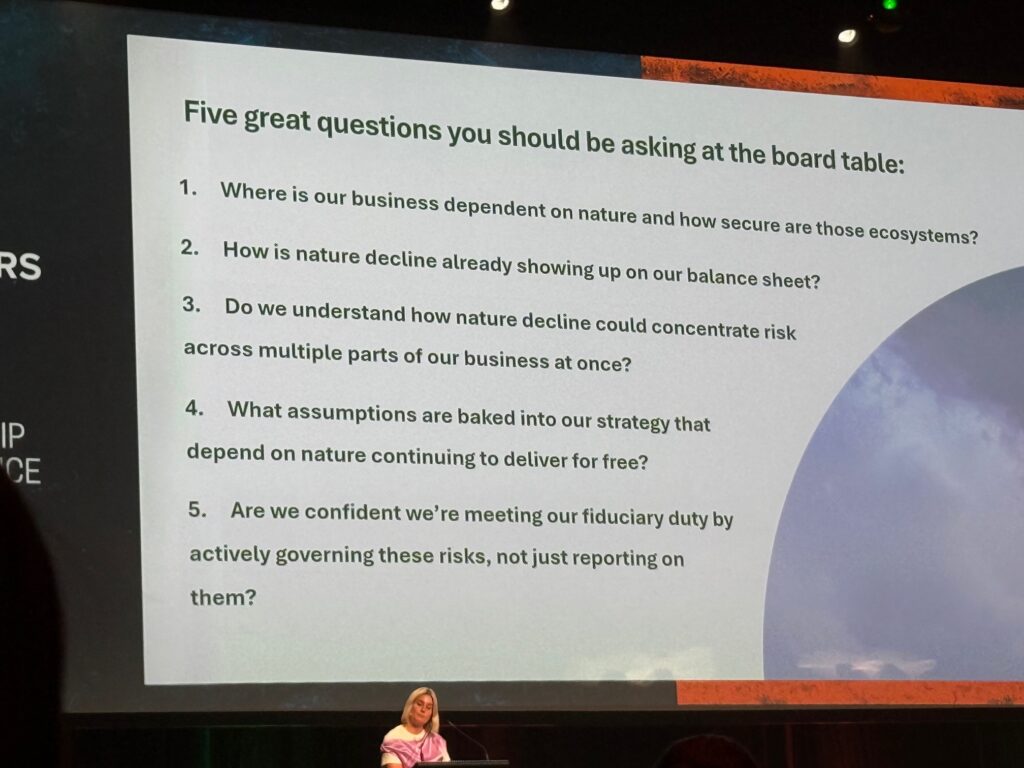
Izzy Fenwick shared about Nature as Business, asking us to imagine our long term value relies on a single supplier … Nature. As Nature provides water, land, air. We have wrongly treated nature as a free supplier. But now climate change is impacting nature – so you need to update risk register, lift capability, demand data and start talking. Not many do this well – could your board?
AI did a summary for me which is this: “Imagine your CFO walks into tomorrow’s board meeting with devastating news. Your company’s most critical supplier – one that provides essential services across every department – has never been properly managed. You’ve never paid their invoices, never stress-tested their capacity, and they’re now showing clear signs of failure. There’s no backup plan and no alternative vendor. Your reaction would be swift and decisive. But here’s the uncomfortable truth: this scenario isn’t hypothetical. That supplier is nature, and most New Zealand boards are sleepwalking into the biggest risk management failure of our time.”
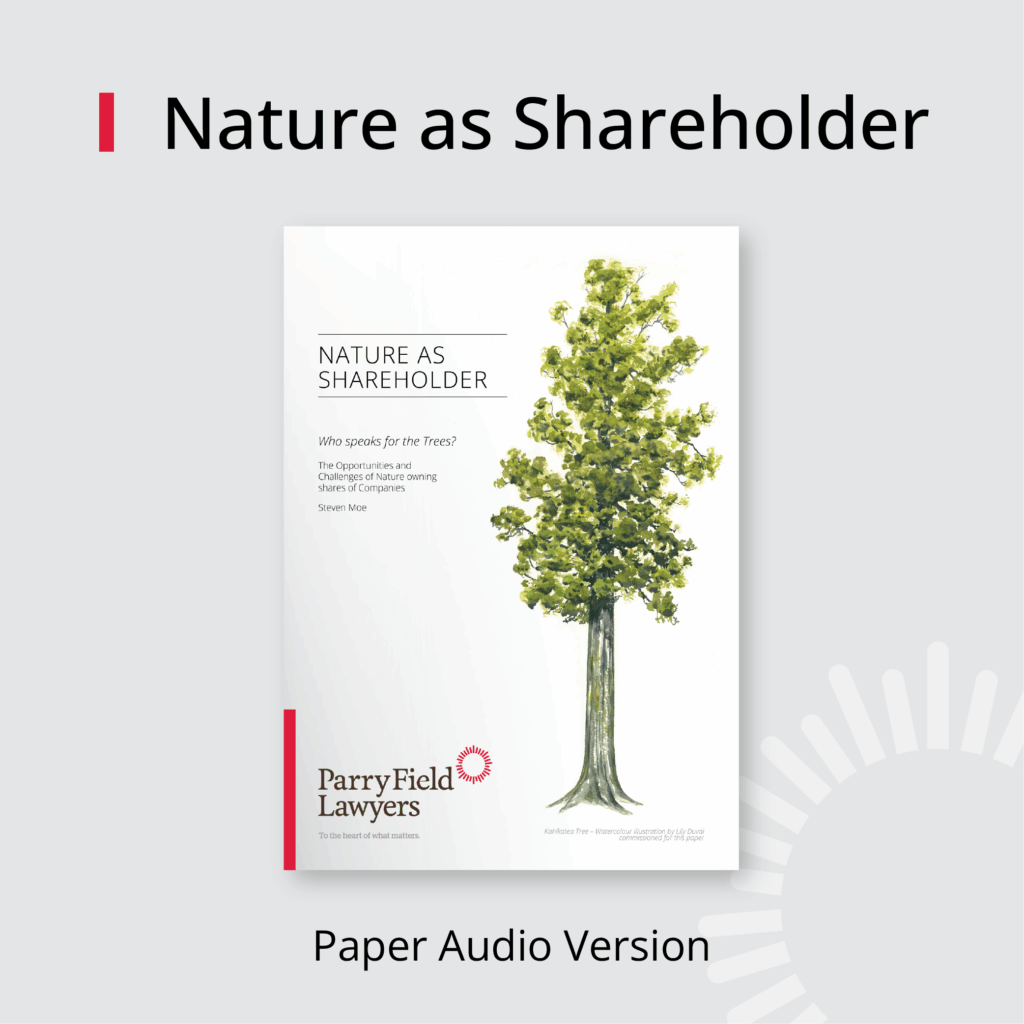
Steven’s reflection: This message is very similar to the one in my recent paper “Nature as Shareholder” so encourage you to check it out here or listen to it over on Seeds podcast www.theseeds.nz
– – –
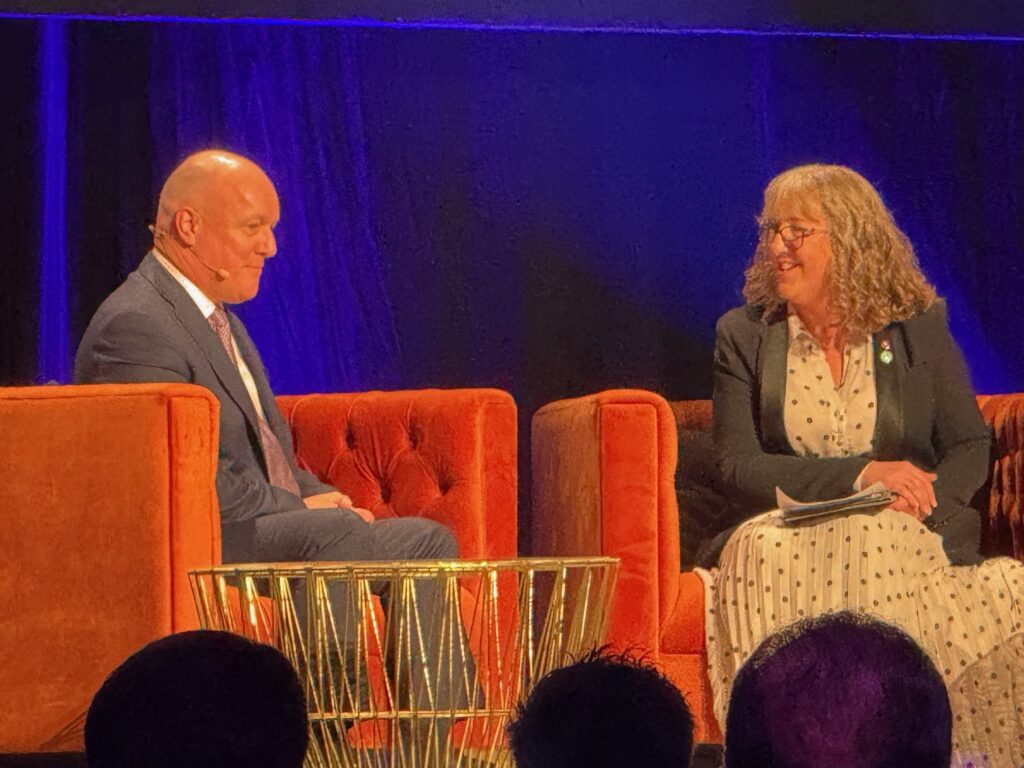
Prime Minister Christopher Luxon shared in a fireside chat with KP the CEO of the IOD about current context of the country. He shared about governance and encouraged boards to:
- build companies with returns
- create positive cultures
- focus on the tech revolution that is here now
- Governance, business and community need to work together.
- He also talked about public sector governance and what good looks like.
- One board agenda item to add? Technology and innovation.
Breakfast Session on The Role of the High Performing Chair
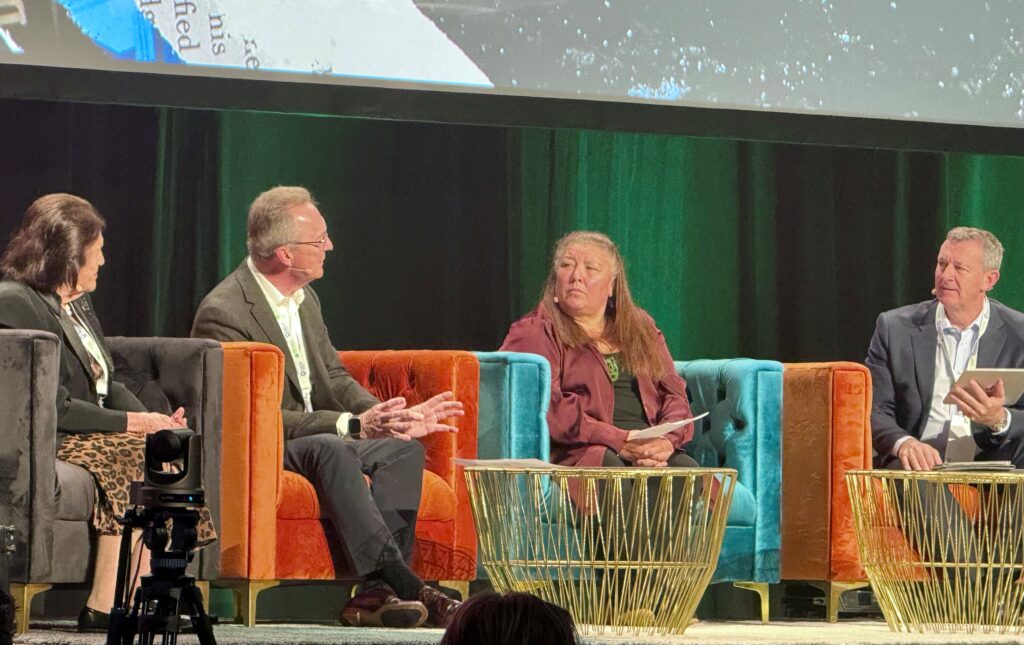
This panel had Marama Royal, Dame Roseanne Meo, Neil Paviour-Smith and George Adams and provided a great overview with helpful tips on being the Board chair.
What is the role of the Chair of the Board? The picture was given of a team – that the Board Chair is like the Coach and should not be on the playing field but instead up in the stands (though they may go down to the side of the field from time to time).
Is the role of the chair becoming more demanding? Yes – though often you can be distracted by stuff that is not actually important. The tough geopolitical environment and economic conditions and cyber risk and AI emergence are challenging.
How do you stay focussed on governance and strategy and not in operations? Prioritise people before paper… think about the impact on who you are serving and use your head and your heart. What will impact be on those people? Perhaps we meet too often and focus on the wrong things eg having to do board reporting the moment the last meeting finished – are you actually making a contribution via meetings. How about meeting quarterly for 4 hours and once a year for 3 days? Perhaps overreliance on checking on details as a proxy for strategy? Don’t call another meeting a “strategy day”… Respect the roles and let the CEO know your plans eg if you contact executive member.
How do you engage all board members and create high trust culture? Be aware of relationship that you have particularly in Iwi context and be respectful of opinions of others. Challenge each other in thoughts and push boundaries of what it means to work together. Take a guiding hand to the Board and call back to first principles about what is expected of board members and also having a bit of fun along the way! Decisions need to be made in accordance with the values you all hold. For Iwi groups it can be important to think about the timing of the year and the season as well – hold meetings in high energy times.
How do you approach underperformance of Board members? You just have to confront this and acknowledge underperformance and work out what is going on. If it will not work out you have to ask them to step down … A board self review can help – you cannot let a toxic environment develop. Will depend on dynamics eg if a majority shareholder appoints the Directors it is more challenging so may need to work with them. If it is needed then try to ensure no one loses mana / face from the process so people can leave with dignity.
How as Chair do you lead a Board around the Board only time? Perhaps we have too long in this area – it scares Executives and is it really needed (perhaps for rem discussions but not much else). Instead look to involve the Executive in the Board discussions on anything that is material. The Chair needs to help set the culture for the Board to ensure that Board only time is not needed.
How do you approach difficult decisions as a Board Chair? Aim for consensus but if we cannot agree then a decision needs to be owned together publicly. Step into the difficult times and help resolve them and the learning you will get from it will be amazing. If there is a specific issue then you might need to have a sub committee to explore and look into that topic. Sometimes you have to hold your breath though and wait and see – hold the nerve. Also there is no substitute for hard work to know all options and get advice you can and listen to it.
How about new initiatives or difficult decisions, how do you consider what to do? Find someone who is an expert and have them come in and explain context and find a way through and give diverse views. You cannot just delay things and not make decisions. Keep in touch and talk to your people and understand your staff and your shareholders and stakeholders and that will guide decisions as well.
How about being on Charity boards? Different behaviours can emerge from being with a charity – they can be difficult but also good experiences. Seek out diverse board appointments.
How often do you meet with CEO and what is on agenda? Different answers: Speak twice a month / quick session on agenda ahead of meeting to discuss emphasis / others speak once a week / keep these catchups informal.
Advice to someone becoming a Chair? Ensure you are really ready because it is an important responsibility and privilege – it is what you can contribute. Be comfortable with leading but being a servant leader. Go for it – it is an honour if you are serving your people.
Can be lonely – how do you look after yourself? Get into nature and connect with family and find your why? Have a life outside of the Boardroom and have other interests. Keep your feet on the ground and don’t become precious.
Steven’s reflection: I liked a lot of the messages in this and liked the challenge of minimising time spent on board meetings eg what would it look to have quarterly sessions BUT with a full 3 days on strategy once a year?
– – –
Paul Spoonley on demographic transformation
This was a session looking at how society has changed. Three key demographic changes:
(1) We have one of highest proportions of over 65s in paid work – similar to Japan.
(2) Also our fertility is dropping and may end up far lower than replacement of population. So fewer people will be in education and fewer will go into workforce. Also, as many Women are choosing work over having more children this means a wave of women in business will likely increase as well.
(3) By 2048 around 33% will have Asian background and more will have Māori background too at 20%, but the growth of Asian background is going to be a really big shift. The impact of diversity on our sectors and companies – not recognising changes will also impact performance of companies if not recognising changing population.
As older age group gets larger and younger gets shorter – where will we get workforce from? Migration? Technology to replace? But the other factor is – do we use onshore talents of our communities – Female, Māori, Pasifika and older workers… embrace diversity as demography is changing and recognise it in what we do.
Steven’s reflection: Related but different it made me think of the coming wave of people who will retire as renters and with less and less pension available what that will look like for people. What if we increase Kiwisaver contribution rates both to address that and so there is more money freed up to be used by Kiwisavers in impact investing. Japan is the country ahead of us in this with aged population but probably more support structures within their society itself than we have here (I lived in Japan 5 years).
– – –
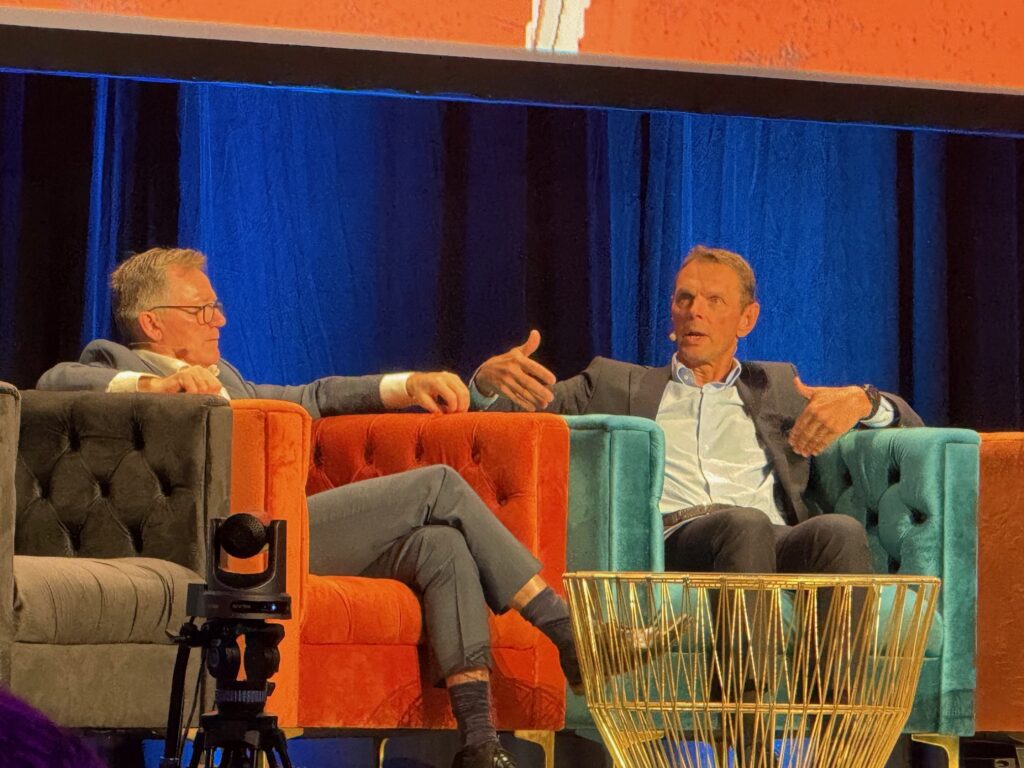
David Kirk and Mark Cross fireside chat about NZ Rugby
Shackleton advertisement in 1914 was mentioned, how often are board roles like this? “Men wanted for hazardous journey. Low wages, bitter cold, long hours of complete darkness. Safe return doubtful. Honour and recognition in event of success.” [Note: in finding the wording online apparently this is an urban legend and no such advert actually was in London papers]
Being able to govern in a way that addresses multiple stakeholders as well as passion and emotion of sport itself – compared to business. It can be like having an AGM every day when a company is not doing so well…
People got to know each other as a Board to start – very personal to begin and sharing on their ‘why’. This helped set the tone. The values of the Board were also discussed – what do we want to be? Talked about behaviours and how to deliver on values. Then once on the same page started to set agenda but had to be aligned first.
As a Chair how do you influence and not dominate? Need to have genuine respect for variety of voices and think you will get better outcome if all can contribute and lead debate. It is OK to change your mind and be open to do things differently. Not everyone has to agree but it is to be aligned in direction when you walk out of the room.
Try to have a bit of fun on the Boards – make it fun – meet interesting people and enjoy their company…
High performing teams operate under pressure but enjoy what they do – learn from failures and go again. This applies across any board context ie sport vs commercial. High performing teams need to enjoy the process. Why not mix fun and governance!
Steven’s reflection: This was an interesting perspective with some helpful points made above but a few comments felt slightly odd related to Women on Boards and their understanding of the game which probably were off the cuff and unintentional but seemed a bit out of touch, and it still felt like it was an All Blacks emphasis rather than for example the Black Ferns who the next day were playing in the semi-finals of the World Cup. Also the couches were really big and people sank into them.
Fast fact: Voices from the future
This session had young board members sharing in a video compilation. They reminded those attending it may mean challenging perspectives to have them on boards. Try to show understanding of that younger perspective. This next generation recognises need to talk between generations and learn too. Some from next generation will be put off by the terminology used around governance. Weave in where you came from and act for purpose. Lead and deliver in crisis times so want to ensure learnings pass on to next generation and nurture emerging talent. Remove hierarchy dynamics and even a Board can feel like an unapproachable power. Don’t be disconnected from community being served. Have more youth engagement on boards. Allow room for young person to raise ideas and upskill.
Steven’s reflection: Really liked this video of about 10 people sharing and there was heaps of content in it so I hope it gets put up and can link to it if that does happen. Was nice some of the people in the video were also at the event.
Panel on Collaborate or Converge for Charities
With Mark Connelly, David Broderick, Reremoana Hammond, Dame Jo Brosnahan and Craig Fisher. Key topics:
- More charities are being created
- Duplication of charities with similar purpose
- Tough economic environment at present so how can charities survive
What does good collaboration look like? You need to build Trust so that means you need to socialise and spend time with others. What is common purpose? Get diversity and have hard conversations and listen as well. Do things with people.
How about within a sector? Even within a movement there can be competing agendas – need to rally around purpose. But also need to agree on how to disagree – collaborate with others but not necessarily on everything. It’s OK to keep your differences clear.
What about doing good and Passion? Passion often guides us – root word is to suffer… so be aware of that. Often organisational structure is result – but could work be done without that? Organisations can bring burden – maybe support someone else is already doing this?
How do you get to know another organisation? From beginning be intentional on seeing flaws and get to know each other. Don’t be afraid to ask hard questions.
What about ego? Need to call back to purpose, leave ego at the door. Call people back to principles and values as baseline.
Collective actions and Te Ao Maori – don’t assume things, for example everyone can do Karakia not just Maori members. Consider who provides advice, don’t assume it of others.
Final thoughts? Talk to funders in an open and honest manner about mergers. Opportunities to work with corporates?
Steven’s reflection: Some good insights and would like to see more discussion about the end result eg what form can mergers take? But that is because I help those to happen in my work. Craig and I wrote this paper on 7 hard questions charities should ask – it also covers issues Charities should consider and is worth a read.

The Board Chair and CEO relationship
Miles Hurrell and Peter McBride were talking with Dame Therese Walsh about Fonterra where they work and discussed this topic:
- a key is to have fun together and actually travel and get to know each other.
- Having different strengths and weaknesses means you can complement each other
- Understand why you exist and who you are is important – purpose has to guide action
- Have clear communication back and forth on priorities and agendas – regular contact so on same page
- As a Chair try to think “give space to CEO, let them come to you” so not chasing up on everything
- Keep it to the big things rather than the small things
- Empowerment is critical – CEO and Exec team needs to feel like they can move forward
- Currently about 20,000 employees so many things going on and if Board and Exec cross over could lead to chaos
- Boards only function as well as the quality of thinking that is presented to the Board
- What if you disagree – don’t get emotional – start to read the signs “that is interesting” means there is an issue
- Don’t anchor to a decision and stick to it, be flexible and be willing to change
- Chair backs CEO – don’t undermine in front of Executive team
- Speed of change – think about timing of when to make the decisions eg give another month to take Board on journey
- How do you avoid getting too close? Can you be friends? Need to keep separation ie they do not socialise together
- Feedback loops are key – if something doesn’t go well then say it. So an annual review is important but do in small bites
- Be clear on why the CEO is there and what they need to deliver
- Comes back to Trust – and Trust someone until they show they cannot be trusted, but once Trust is broken cannot continue
- Succession planning – can be a taboo topic but is something management needs to be on top of as well as Board
- When starting a role do you start to plan your exit and looking for external succession and opportunities or internal promotions?
Steven’s reflections: Some good reminders in this talk of things to think about for those in these two roles. I thought Dame Therese did a really great job facilitating too and kept it light and the music at the end was funny. Abba!
– – –
Fireside chat with Joe Aston
This session on Qantas came from a book Joe wrote and he described some of the bad behaviour that had happened there. He spent months writing it and it took a lot of time but he wanted to shine a light on behaviour there. Qantas had been doing well – but when Covid hit, they realised they could use it as a chance to charge more. The way they did this was to sack workforce and pricing issues, ghost flights and anticompetitive behaviour etc.
Key themes: The board was so invested in being on the board that it was hard to rock the boat or question the way things are done… too much was set up to make conflict difficult. One of the key things that is needed is a Chair who can realise the dynamics and make change. A charismatic CEO may get away with a lot – the Board needs to question their version of events. The Board could become too collegiate – if you and your spouse are meeting with others and their spouses it becomes harder to talk objectively about shortfalls. This is the role of the Chair and needs to question things.
Be prepared to have hard conversations – that is what separates high performing boards from the others.
In summary conflict was the key issue here – too many interests and inability to disagree or call things as they are. A “reciprocally appointed aristocracy”…
But ending with reflections on humanity itself – could we fall victim to not staying grounded too?
Steven’s reflections: I thought this was a good session as it reminded us of the dangers of power gone to our heads in boards and the need to stay in touch with reality and not let conflicts mean we do not speak truth when it is needed.
– – –
A great event, consider coming along to the one next year in Wellington! Feel free to post the link to this with any comments on what stands out to you and tag me in and will add in a comment!
Also if you read this far, why not check out Seeds podcast with 461 interviews and also my book of reflections on work and career and impact! It is a download here.